
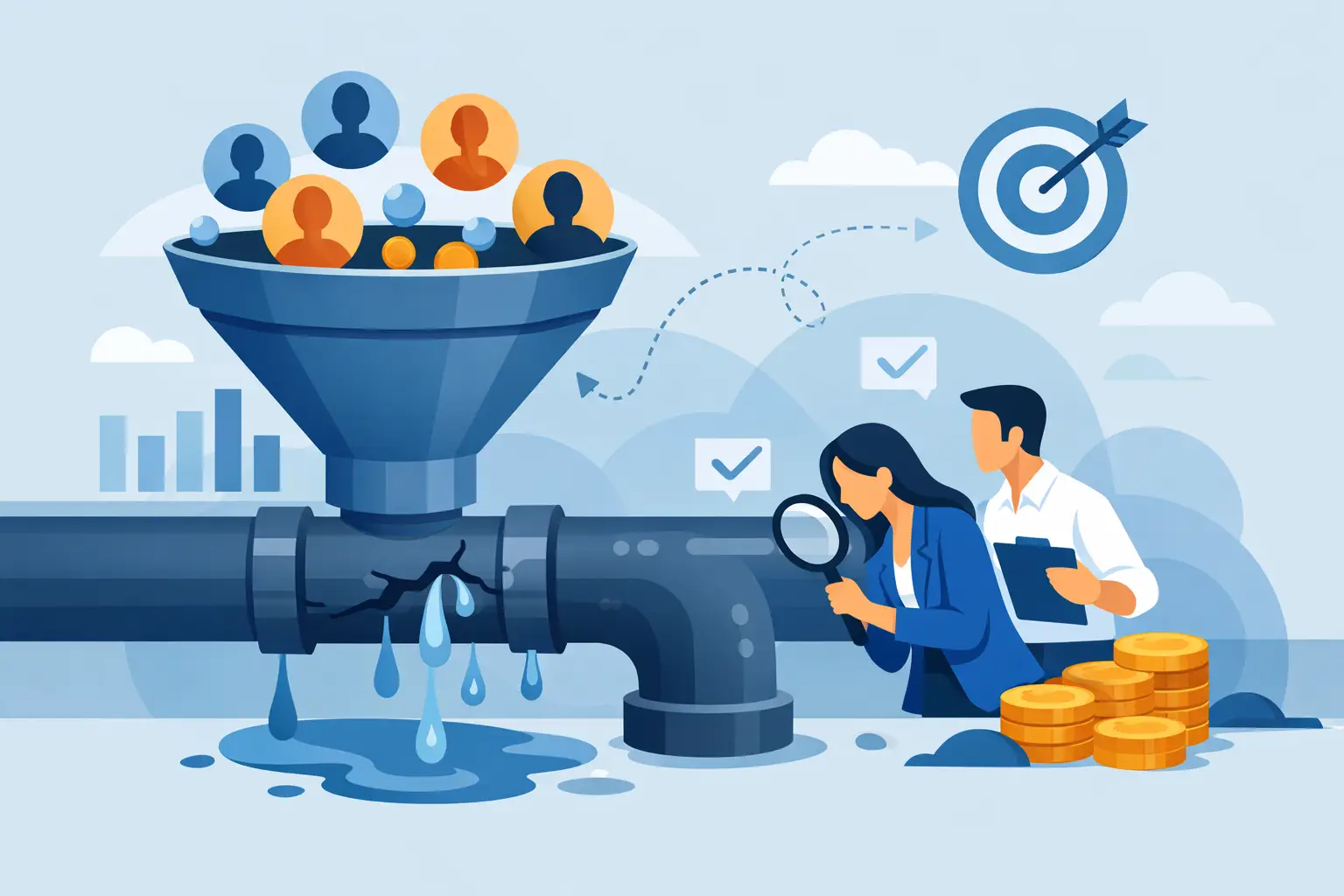
A full calendar is not the same as a healthy pipeline. If your team is spending its week answering calls from people outside your service area, below your minimum budget, or looking for something you do not sell, the issue is not lead volume. It is lead quality.
If you are asking, “why are my leads unqualified,” start by looking beyond the sales team. Unqualified leads are usually created earlier in the customer journey – by the audience you target, the message you use, the offer you make, or the information you fail to collect. More traffic will only make the problem more expensive.
Why Are My Leads Unqualified? Start With the Definition
A lead is not qualified just because someone completed a form, called your office, or requested a quote. For a small business, a qualified lead should have a realistic need for your service, fit your geographic area, have enough budget or buying authority, and be reasonably likely to act within a useful timeframe.
That definition will vary. A Tucson home services company may need jobs within a 25-mile radius and a minimum project value. A B2B provider may need to reach decision-makers at companies above a certain size. A nonprofit may define quality by donor capacity or volunteer commitment.
The problem begins when marketing tracks every inquiry as the same outcome. A $99 service request, a job applicant, a spam form, and a high-value prospect should not all count as one lead in your reporting. If they do, your cost per lead can look efficient while your actual return falls apart.
Before changing campaigns, have sales and marketing agree on three categories: qualified lead, unqualified lead, and opportunity. This gives you a standard for judging channel performance instead of relying on anecdotes.
Your Targeting Is Too Broad
Broad targeting is one of the most common sources of poor lead quality. It often happens when a campaign is built to maximize clicks, reach, or form fills rather than likely revenue.
For example, a local contractor may advertise to an entire state because the audience setting is easy to expand. The result is inquiries from areas the business will not serve. A professional service firm may target general interest categories that attract people researching a problem but not ready or able to hire help.
Paid media platforms are designed to find people who are likely to take the action you request. If you tell the platform to find the cheapest form submission, it will often do exactly that. That may include people who are curious, price shopping, or simply filling out every form they see.
Tighten geography first. For Southern Arizona businesses, that may mean separating Tucson, Sierra Vista, and surrounding communities instead of treating them as one audience. Then review the search terms, audience segments, and placements producing leads. Exclude locations, queries, and audiences that consistently generate poor-fit inquiries.
This does not mean every campaign must be narrowly restricted. Broad awareness campaigns can have value when they support a longer buying cycle. The trade-off is that they should not be judged by the same lead-quality standard as a campaign built to generate immediate sales calls.
Your Message Is Inviting the Wrong People
Your advertising message qualifies prospects before they ever contact you. Vague promises tend to attract vague interest.
Phrases such as “free quote,” “best prices,” or “we can help” may create response volume, but they give people little reason to determine whether they are a fit. If your business serves commercial clients, says so. If you specialize in premium installations, regulated industries, emergency repairs, or projects above a certain scope, make that clear.
Specificity can reduce lead volume. That is often a good trade when it removes conversations your team cannot convert. A campaign that produces 20 qualified leads is more useful than one producing 80 inquiries that lead nowhere.
Look closely at the connection between the ad and the landing page. If an ad promotes a low introductory price but the page pushes a larger service package, prospects may feel misled. If an ad promises fast help but your team responds two business days later, the highest-intent leads may already be gone. Message alignment protects both conversion rate and trust.
Your Forms and Calls Are Not Screening Enough
A short form can improve conversion rates, but it can also leave your team with no way to prioritize. The right amount of screening depends on the sales process.
For a simple, lower-cost service, name, phone number, ZIP code, and service need may be enough. For a higher-value B2B sale, asking about company size, project timeline, budget range, or role can save significant time. The goal is not to make every visitor complete an application. It is to collect the few details that determine whether a follow-up is worthwhile.
Phone calls need the same discipline. If reception staff or sales representatives do not have a simple qualification process, every call can become a lengthy conversation. Create a brief call script that confirms service area, need, timeline, and basic fit. This is not about being dismissive. It is about directing people to the right next step while protecting your team’s capacity.
Be careful not to overcorrect. A form with too many required questions can discourage good prospects, especially on mobile. Test one or two qualifying questions at a time, then compare qualified lead rate – not just form completion rate.
Your Offer Is Attracting Bargain Hunters, Not Buyers
Offers are useful, but the wrong offer can train your marketing to find people who only respond to discounts. This is especially common when businesses use giveaways, broad contests, steep coupons, or “free consultation” language without a clear connection to the paid service.
Ask what behavior your offer rewards. Does it attract someone actively evaluating your solution, or someone who wants anything free? A free estimate for a defined service may be appropriate. A generic giveaway may generate names without creating real demand.
Consider offers that demonstrate value while requiring relevant intent. A commercial HVAC company could offer a facility assessment. A consultant could offer a focused planning session. A home improvement business could offer design guidance tied to a minimum project scope. The offer should reflect the type of customer you want more of.
You Are Optimizing to the Wrong Metrics
Cost per lead is a useful operating metric, but it is not a business outcome. A low cost per lead can hide a serious quality problem. The same is true for click-through rate, impressions, and raw call volume.
The stronger measurement path is to connect marketing activity to the downstream stages that matter: qualified leads, appointments, opportunities, closed sales, revenue, and return on ad spend. This requires feedback from the sales process, not just data from the ad platform.
At minimum, track the original source for each lead and record a disposition after contact. Was it qualified? Was it outside the service area? Was it a competitor, job seeker, spam inquiry, or price-only shopper? Were they unreachable? These answers show where waste is coming from.
A simple monthly review can reveal patterns quickly. If one campaign produces many leads but few qualified conversations, reduce or pause it. If another campaign costs more per inquiry but produces most of your booked appointments, it may deserve more budget. Marketing efficiency comes from comparing cost to value, not cost to activity.
Follow-Up May Be Making Good Leads Look Bad
Not every lead labeled “unqualified” was actually a poor fit. Some were valid prospects who lost interest because the response was slow, unclear, or inconsistent.
Review response time by source. High-intent search leads generally expect an answer quickly. If they submit a request at 10 a.m. and hear from your business the next day, they may have already contacted three competitors. That lead may be marked as unresponsive, but the real issue was process.
Also look at how the first conversation is handled. A rushed response that focuses only on price can turn a promising inquiry into a dead end. Give your team a clear process for confirming needs, explaining next steps, and scheduling the appropriate follow-up. Good lead generation and good lead handling are connected.
Build a Better Feedback Loop
The most productive fix is a regular conversation between the person managing marketing and the people speaking with prospects. Sales hears the objections, confusion, and bad-fit patterns first. Marketing needs that information to adjust targeting, keywords, creative, forms, and offers.
Review lead quality weekly when campaigns are new or spend is significant. Keep the discussion practical: Which leads were worth pursuing? Which were not? Why? What campaign, search term, location, or message produced them? Then make one or two measurable changes rather than rebuilding everything at once.
When your lead definition, campaign setup, and sales follow-up are working from the same standard, marketing becomes easier to manage. You stop paying for noise and start learning which investments create real business opportunities. The next useful question is not how to get more leads. It is what needs to change so the right customer recognizes your business as the right choice.